

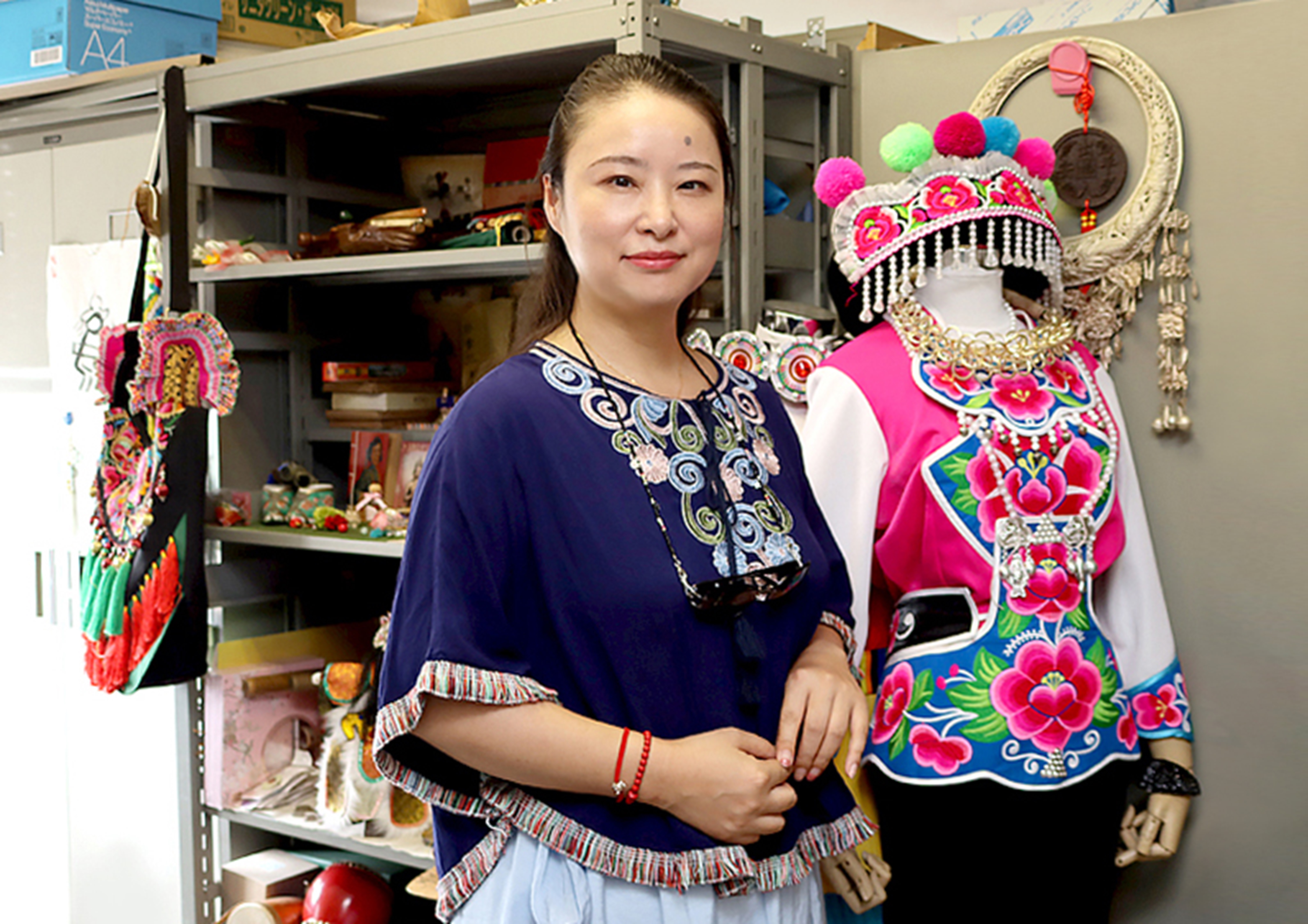
Specializing in ancient Chinese music, professional Chinese pipa performer
Profile
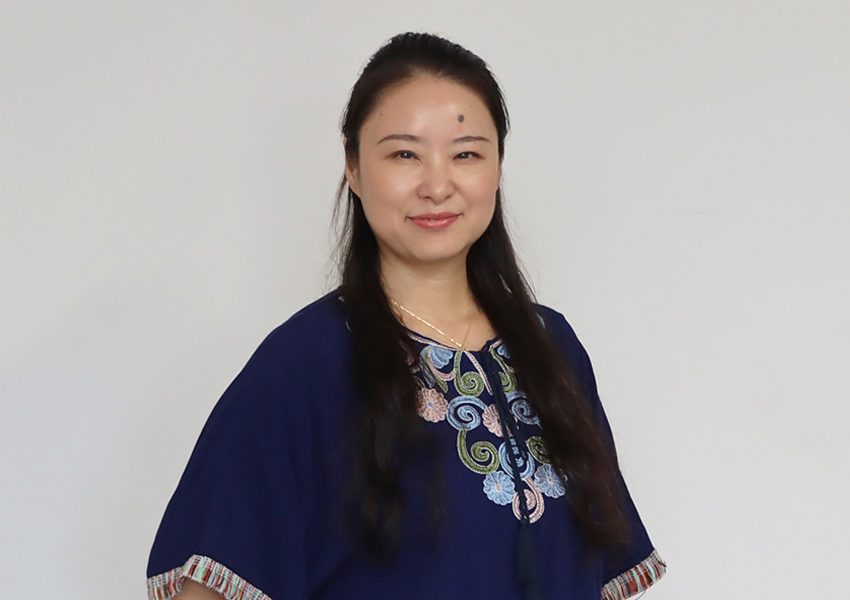
Associate Professor Zong TingTing was born in Xi’an, China. She began playing the pipa at the age of six and graduated at the top of her class from the Xi’an Arts School, majoring in the Chinese pipa. She came to Japan as a student in 1997. In 2001, she performed the pipa at the 10th International Student’s Music Contest and won first prize, which led to her nationwide debut in Japan.
In 2007, she completed the doctoral program in Chubu University’s Graduate School of Global Humanics and obtained her Ph.D. (Languages and Cultures). After earning her doctorate, she worked as a senior assistant professor in the College of International Studies at Chubu University and is currently an associate professor in the same department. Her hobbies include gardening and picnicking. Recently, she has been delighted by the fact that her eldest son, a junior high school student, has become enthusiastic about cooking and happily serves full-course French meals while wearing a chef’s coat.
Close Up with Associate Prof. Zong!
Research Interest
How did you start your research?
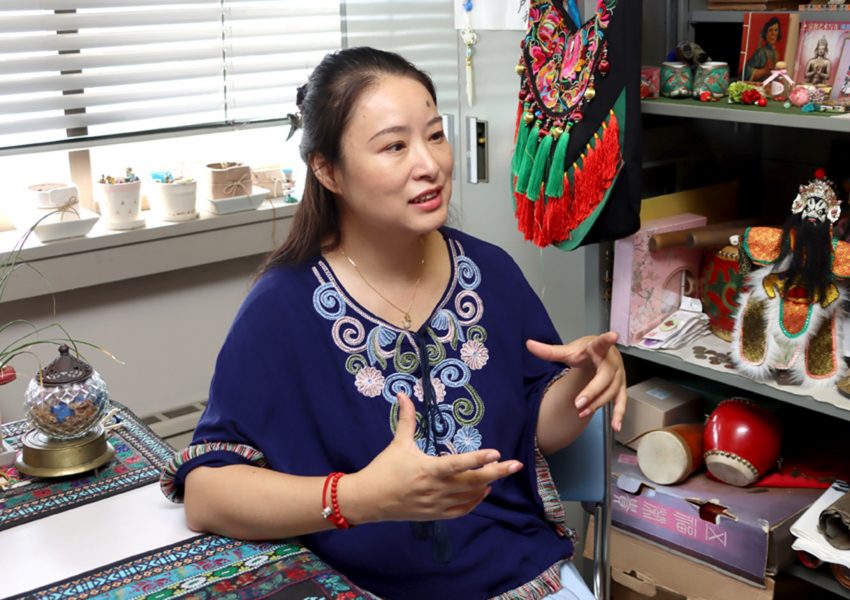
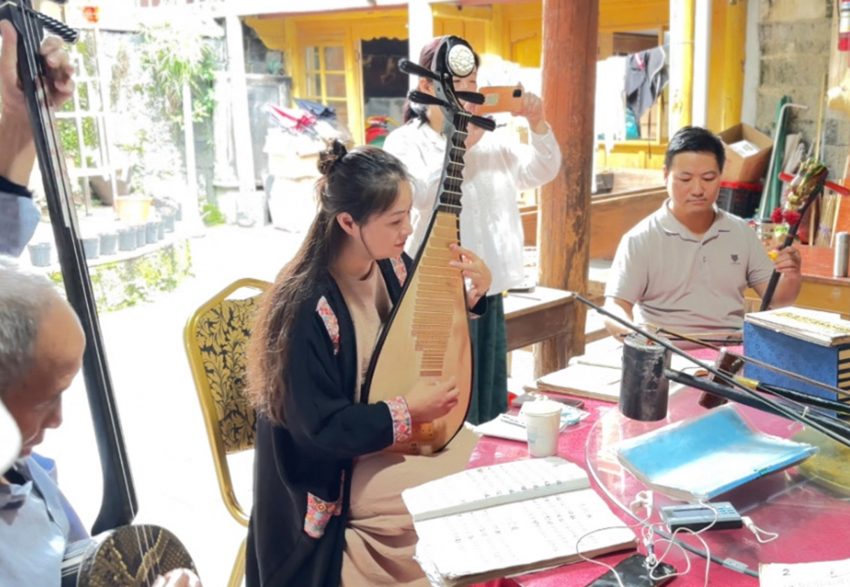
I conduct research on Dongjing music, which is court music of the ancient Han Chinese that has been preserved in Yunnan Province, where many ethnic minorities live. While touring around the world as a pipa performer, I visited Lijiang City in Yunnan Province and heard Daoist ritual music known as Naxi Ancient Music for the first time. There, elders (average age of 80) were playing a rare type of pipa. I was filled with many questions: Why was an instrument depicted in Silk Road murals—believed to be no longer in use—still being played here? Why are they able to perform it so naturally? Why are melodies from far away Chang’an resonating in this remote mountainous region? My curiosity was deeply stirred, and I could not sleep that night. Being naturally inquisitive, I decided immediately to pursue this research. Even now, more than 20 years later, I continue to conduct fieldwork in the area. I also research ancient Chinese history and culture, including traditional clothing.
Long-term fieldwork through the “Chubu University Overseas Research” program
From April to August 2023, I conducted field research in China using the ‘Chubu University Overseas Research’ program. In June, I gave a lecture at Lijiang Culture and Tourism College, which is the only university in the World Heritage city of Lijiang, and I was subsequently appointed as visiting professor. This appointment enabled me to establish connections with universities in regions of China where I previously had no academic ties. I hope this will allow me to cultivate future collaborations, such as new study-abroad destinations for students interested in ethnic minority studies.
During my fieldwork, I surveyed Dongjing music across nearly the entire Yunnan Province—an area roughly the size of Japan’s main island—and compared regional characteristics. As a result, I found that even within Lijiang City, each locality had its own distinctive features in terms of instruments, melodies, and methods of transmission. Because music transcends national borders, communication is possible even in a place you are visiting for the first time, as long as you have an instrument and a musical score. My 10-year-old son accompanied me throughout my field research, and he served as a great assistant. However, he grew tired of eating our staple food, rice noodles, every day for five months, and he started complaining toward the end (laugh).
Portraying Japanese–Chinese history through musical theater
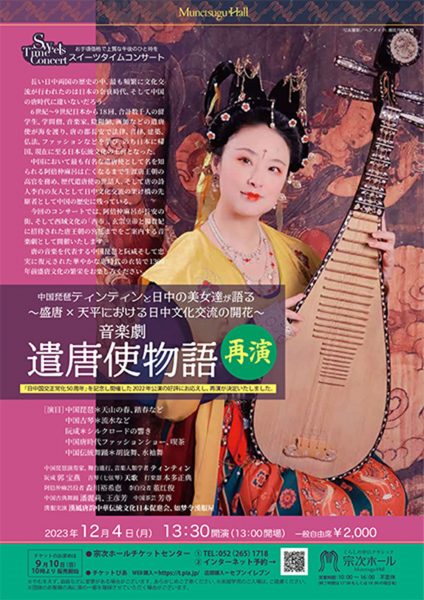
In 2022, to commemorate the 50th anniversary of the normalization of Japan and China relations, I produced and performed the musical theater work, The Story of the Kentōshi (Japanese Envoys to Tang China). This performance was a musical drama depicting the history of both Japan and China, and due to favorable reception, a second performance was given in December 2023.
Throughout the long history of Japan–China relations, the most active period of cultural exchange was during Japan’s Nara period and China’s Tang Dynasty. Between the 6th and 9th centuries, Japan sent Kentōshi missions to China 18 times, involving several thousand students, scholar-monks, musicians, yin-yang diviners, painters, and others. After studying law, music, architecture, Buddhism, and more in the Tang capital of Chang’an, the visitors brought these cultural elements back to Japan, laying the foundation for what is now Japanese traditional culture. Among the most famous Kentōshi in China is Abe no Nakamaro, who served as a high-ranking official of the Tang Dynasty and as a liaison for successive Japanese envoys. He was also a friend of the Tang poet Li Bai and is remembered in Chinese history as a pioneer who bridged Japanese – Chinese cultural exchange.
This musical theater production recreates the city of Chang’an where Abe no Nakamaro lived, as well as the culture of the Western Market, which was influenced by the Western regions of ancient China, and the court culture of the Tang Dynasty, which he visited at the invitation of Emperor Xuanzong and Yang Guifei. Using the pipa and ruanxian, which are representative instruments of Tang music, along with magnificent Tang-era costumes, faithfully reconstructed based on historical sources, the audience can enjoy the splendor of Tang culture from 1,300 years ago.
Such activities are part of my social contributions as a researcher. I believe that expressing complex academic knowledge not only through written texts, but also through performance, is something that an ethnomusicologist should do.
Student Life
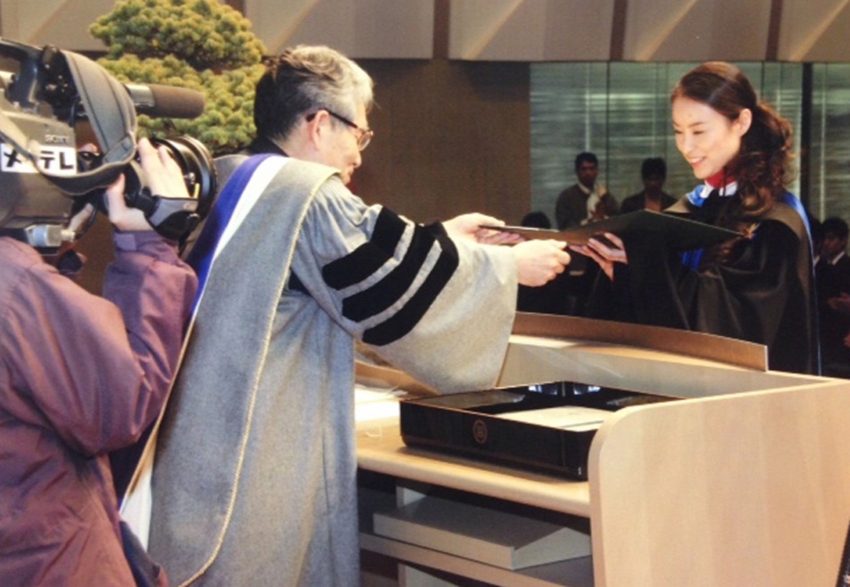
Although I had been active as a pipa performer for many years, becoming a university faculty member was my greatest dream. I admired Professor Nobuhiro Nagashima, an anthropologist (Professor Emeritus of Chubu University and former Dean of the College of International Studies), and I strongly wished to study under his guidance. This led me to enroll in the Graduate School of Global Humanics at Chubu University, where he was teaching.
I desperately balanced my performing career and academic studies, giving more than 50 performances a year while writing my master’s and doctoral theses. I sometimes worked on my dissertation while traveling on the Shinkansen or preparing in dressing rooms. During long vacations, I always traveled to Yunnan Province, composing music in between periods of fieldwork. ‘Play hard, challenge yourself, and manage your time well’—this sums up my student days.
After Professor Nagashima retired in 2007, I became a faculty member at Chubu University. He once told me, ‘Professor Tingting, please stay with the College of International Studies at Chubu University for a long time.’ Carrying those words in my heart, I continue to work hard. I truly love Chubu University, and I believe my affection for the university is greater than anyone else’s.
Message
Many people think of academic scholarship as something difficult. In reality, that is not the case. Academia exists everywhere, and with curiosity and the ability to act, you too may become an excellent researcher. My personal motto is ‘If you study something deeply enough, anything can become a subject of academic inquiry.’ When you enter university, create a new, exciting world that is different from the person you were before.