Exploring the hidden faces of local communities through the compilation of regional history
Profile
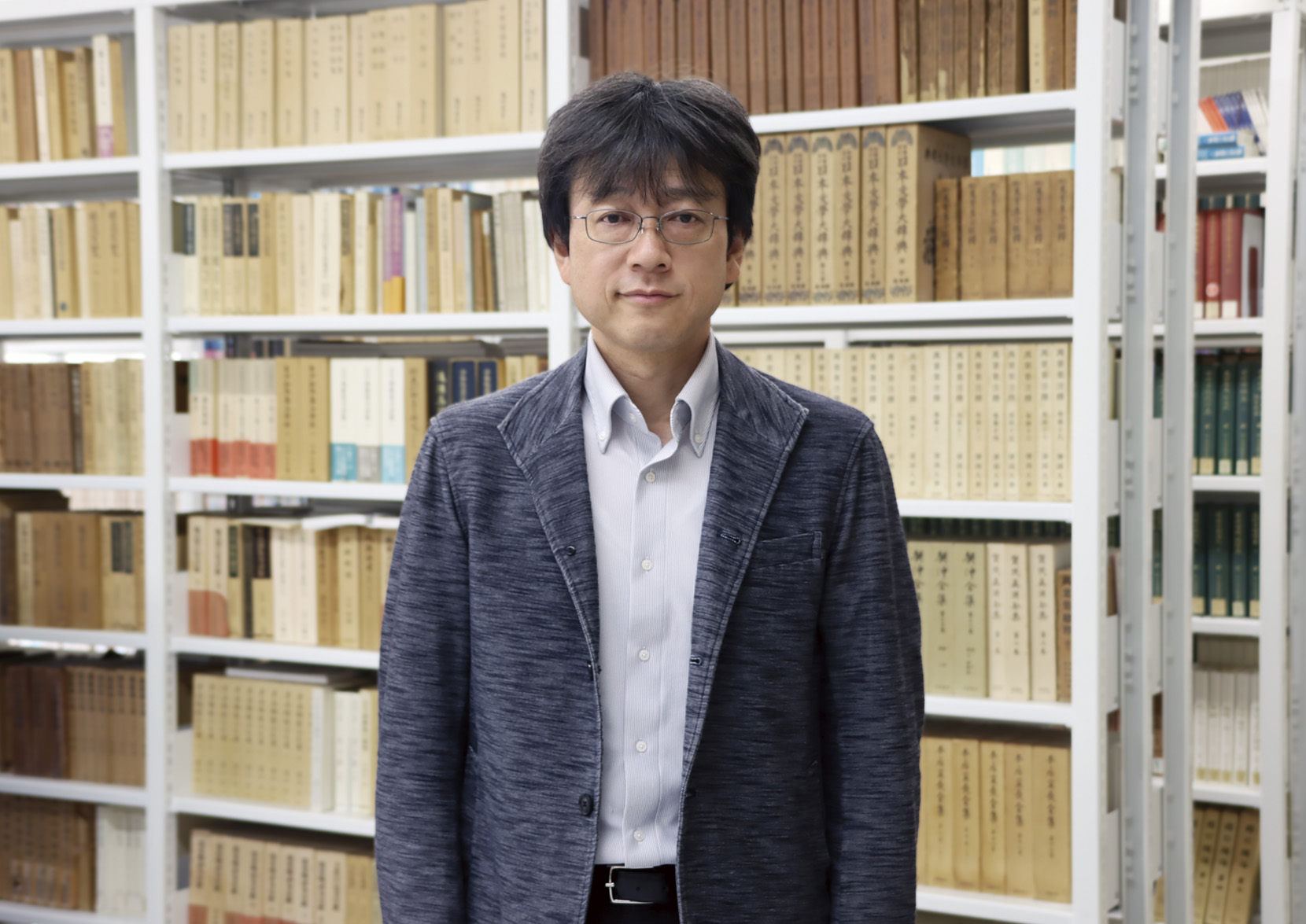
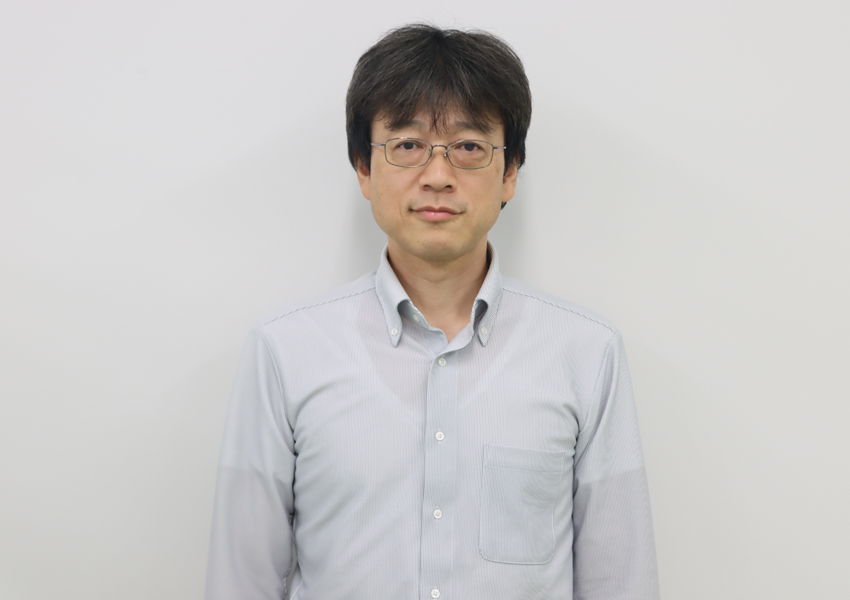
Born in the city of Nagoya, Professor Tomoyuki Mizuno completed the doctoral program at the Graduate School of Humanities, Nagoya University, with a Ph.D. in History. He joined Chubu University in 2011 after serving as a part-time lecturer at Nihon Fukushi University and as an associate professor in the Faculty of Commerce at Takachiho University. He is currently a professor in the Department of History and Geography, College of Humanities.
On his days off, Prof. Mizuno often spends time with his family. Watching anime together with his sixth-grade child has helped him learn about recent trends.
One of the recent highlights for him was that, after being invited by an acquaintance-a university professor-to join a renga (linked-verse poetry) group, he entered a competition and, despite it being his first attempt, was able to win a prize.
Close Up with Prof. Mizuno!
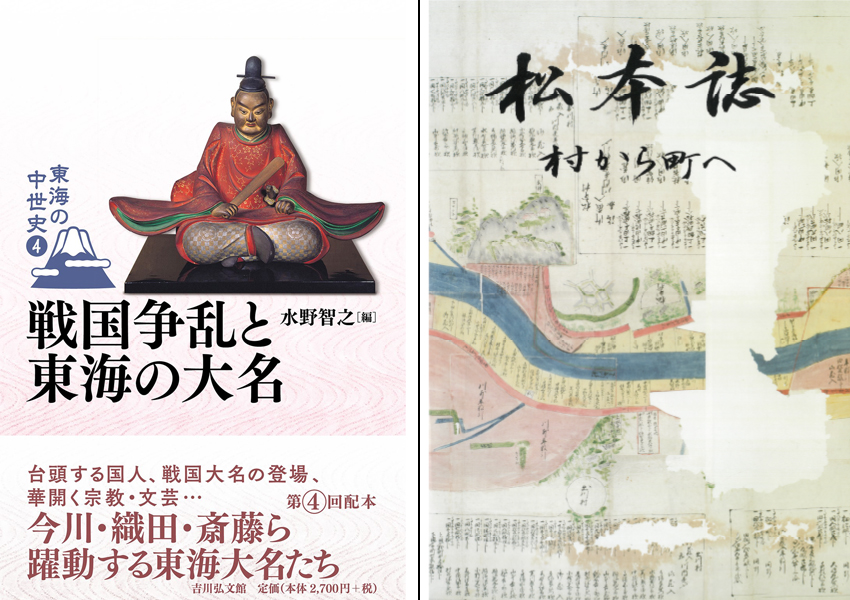
“Matsumoto Journal,” a local history of Matsumoto, Kasugai City (contributing editor, right)
Research Interest
At present, I am mainly engaged in two research themes. The first is a study of relations between the imperial court and the warrior government from the Nanboku-cho period through the Oda–Toyotomi era. I examine the political relationships and the nature of power between the imperial court and the shogunate, or between the emperor and the shogun or other warrior elites. When people think of the Sengoku period, many tend to imagine that the shogun and the daimyō—that is, the warrior class—completely dominated Japan as a whole. However, the authority of the imperial court remained firmly in place. Scholars have long debated why the court was able to wield such influence despite its lack of military power. I believe that this issue cannot be understood by comparing military strength alone, but must also be considered in the context of cultural events and ceremonial rituals, etc.
My second research theme is the regional history of the Tokai area. I have been fortunate to be involved in compiling the history of Aichi Prefecture, as well as local histories of municipalities within the prefecture. Through this work, I examine the medieval history of the Owari and Mikawa Provinces. Because relatively few historical sources from the medieval period survive, uncovering a history rooted in a specific region from such limited materials is extremely challenging. Investigating the rise and fall of various powers in Owari and Mikawa and learning the history that unfolded in the very region where I was born and raised is something I find deeply fascinating.
How did you start your research?
From around my third year as an undergraduate student, I became deeply absorbed in uncovering historical facts on my own and examining the theories of previous research. However, I knew that securing a position as a researcher was extremely difficult, so I was torn between two options: finding a job or continuing to graduate school.
During my fourth year, I passed the teacher employment examination and considered becoming a schoolteacher. In the end, though, I decided that if there was something I truly wanted to try, I should do it while I was still young—because once you get older, it can become much harder. With that in mind, I declined the teaching position and chose to go on to graduate school. Looking back, I am glad I did it, as it allowed me to continue my research and has led me to where I am today.
Compiling local histories and assisting with PR activities within the prefecture
Recently, I worked on compiling the History of Toyoyama Town, a project held in conjunction with the 50th anniversary of the town, located just north of Nagoya. Through a connection with the town’s mayor, who is a graduate of Chubu University, a collaboration was established between the university and the town. I was invited to participate as a faculty member to assist with the compilation of the town history. As part of this project, I visited historical sites, temples, and private homes together with students, and we conducted surveys of historical documents. The students seemed to enjoy taking part in the research.
I was also involved in compiling the history of the Matsumoto area in Kasugai, where Chubu University is located. The university was approached for cooperation with this project, and the request was passed on to me. We examined documents housed at the Matsumoto Community Center, which dated from the Edo period through the Shōwa and Heisei eras.
We also conducted interviews with residents about everyday life in the past—covering topics such as food, pasttimes, customs, festivals, local shops, farming practices, and mining at a sub-bituminous coal mine. Through these activities, I focus on helping the younger generation develop an awareness that their local communities have important history and cultural heritage, and I try to encourage them to make new and fascinating discoveries in the region.
In addition to compiling local histories, I am also involved in municipal PR activities. In Toyoyama Town, I worked together with students to produce a promotional video highlighting local cultural assets. It can currently be seen on the official Toyoyama Town YouTube channel. For the 50th anniversary of Owariasahi City, celebrated in 2020, I was invited to be a speaker at one of the events. Through that connection, I collaborated with a local cable television station to produce a program showcasing the city’s heritage and attractions. This program is also currently available on the official Owariasahi City YouTube channel.
Student Life
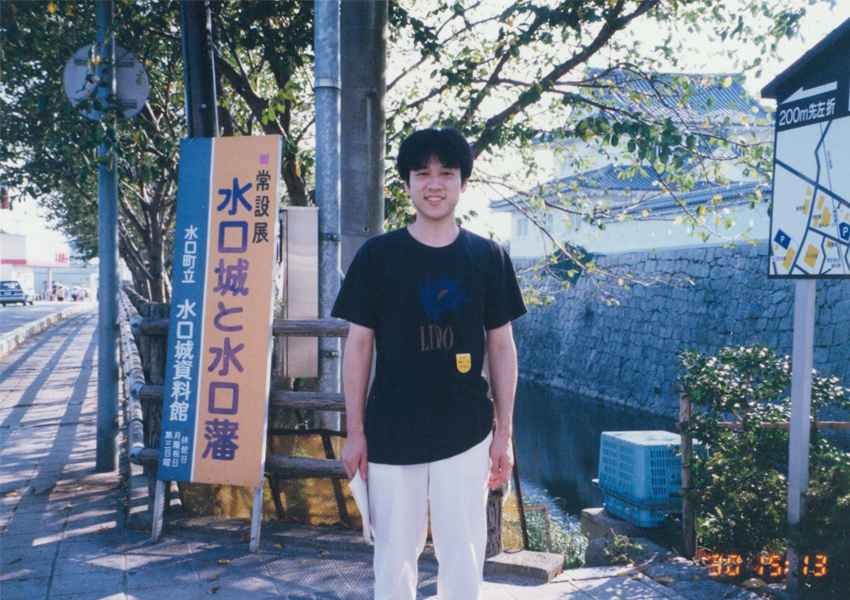
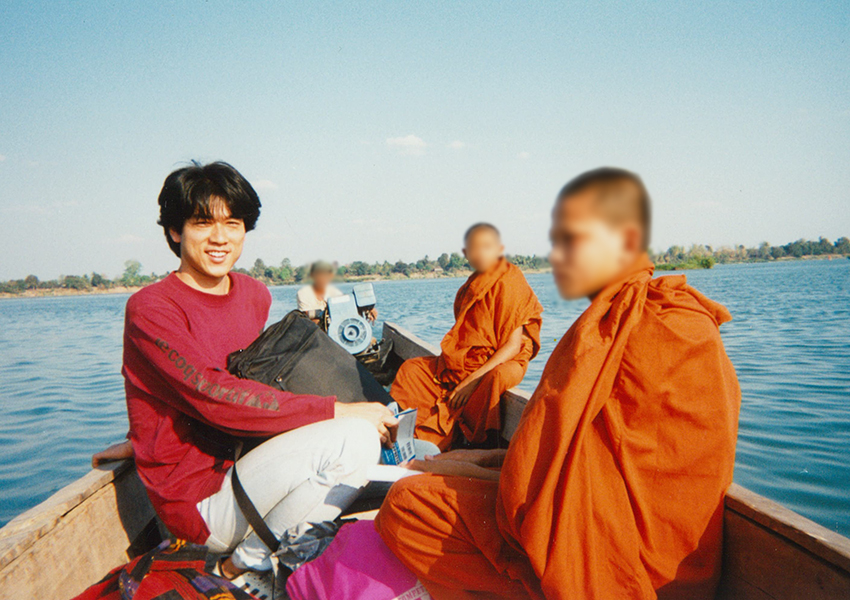
When I think back on my student days, I of course remember being busy with my studies, but I also recall being very hectic, working various part-time jobs. I earned money to buy a motorcycle and a car, and to enjoy winter sports. Because I loved going out and traveling, I also spent money on overseas trips and visiting places related to my research.
One purchase from that period that left a particularly strong impression on me was a word processor. At the time, it was standard for students to write reports by hand, but the introduction of word processors made rewriting much easier and felt truly revolutionary. I wanted to get one before starting my graduation thesis, so I spent more than 100,000 yen—an enormous sum to use for a student’s study tool at the time—to buy a word processor.
Looking back, I feel that my student years were a time when I pursued what I truly wanted, with great dedication.
Message
I hope that you will find a topic that you truly enjoy and devote yourself to contemplating it wholeheartedly. The field of history, which is my area of specialization, is a discipline that examines what is written in historical sources and pushes beyond the interpretations of earlier scholars by thinking more deeply and thoroughly, thereby opening new avenues of research. This approach is not limited to academic research; it applies to all aspects of life. It leads to recognizing ways to improve the current situation and to taking action to make things better. For these reasons, I hope that all of you will continue to make sustained efforts for critical thinking.